
 By
A tuned diesel may hold a grade with less shifting and less throttle drama. It can’t turn a light truck into a heavier one or rewrite the ratings on the door sticker.
What a tune actually changes
The engine control module decides when fuel is injected, how much rail pressure sits behind it, how much boost the turbo is asked to make, and how much torque the computer will allow. A tune rewrites those tables. The pistons, turbo, injectors, and intercooler stay the same.
Factory calibration balances power, emissions, drivability, and durability across many operating conditions. Changing it can alter how the truck responds, but the result depends on the particular calibration and truck. A more aggressive file can increase thermal and mechanical loads. Available performance is not necessarily unused capacity that can be claimed without consequences.
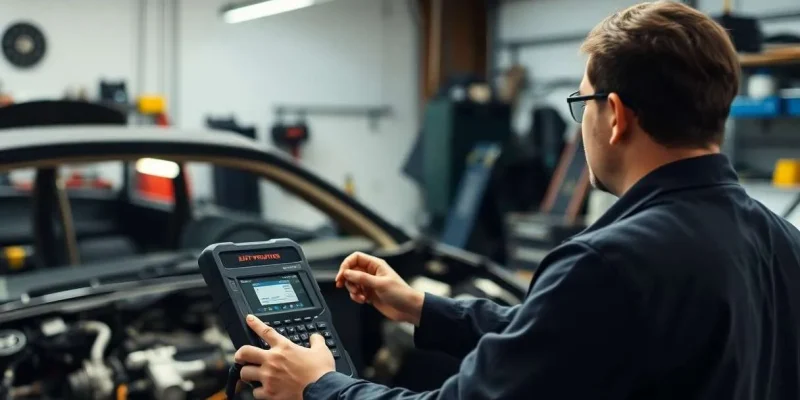
For a tow vehicle, useful improvements should be judged under sustained load rather than during an empty acceleration run. Handheld programmers can provide one route to loading compatible files, and some also display live operating data. Hardware capability, calibration quality, and monitoring coverage are separate questions. Buying a device does not settle all three, nor does a sharper pedal response prove that the engine is producing more usable power.
Why towing cares about torque delivery
Torque and horsepower describe related aspects of engine output; neither tells the whole towing story alone. Torque at the wheels depends on gearing as well as engine torque. Maintaining speed on a sustained climb also requires adequate power. A truck that feels forceful at low speed may still need a lower gear on a long grade.
For a Cummins-powered Ram, the useful question is how smoothly the engine and transmission deliver that output across the speeds the truck actually uses. A tow-oriented calibration may aim for more predictable throttle response and a usable torque curve rather than the biggest peak figure. Whether it achieves that depends on the engine, transmission, load, and calibration.
Fewer shifts can make driving feel calmer, but avoiding every downshift is not a sound goal. A lower gear may let the engine operate more comfortably under sustained load. Holding a high gear at low RPM simply because the truck can pull it can put unnecessary strain on the drivetrain. The objective is controlled, repeatable performance, not making a loaded truck climb every hill without changing gears.
What better pull may feel like with a trailer
Possible benefits include a more progressive pedal response and less hesitation when the driver asks for power. Depending on the truck and any compatible transmission calibration, shifting behavior may also change. These are goals to discuss with a provider, not guaranteed results from installing a programmer. An unloaded test drive cannot demonstrate how a file behaves during a long climb with a trailer.
Monitoring provides context for evaluating those changes. Some devices include a display, while others need separate gauges or sensors. Drivers need to understand what the system can actually measure, because a screen full of numbers does not establish that a setup is safe.
Common towing readings include exhaust gas temperature, transmission temperature, boost, and fuel pressure, using compatible data feeds or sensors. Exhaust heat reveals load and fueling conditions that the coolant gauge never shows, since coolant can look normal while internal temperatures climb on a long pull. Transmission temperature helps reveal heat buildup under load, but it cannot diagnose clutch condition or fluid health by itself.
Sensor placement shapes what those numbers mean. Many factory sensors estimate or sample in spots chosen for emissions control, not for sustained towing insight. An aftermarket pyrometer probe mounted before the turbo sees heat first and reads higher, while a post-turbo spot reads cooler and slower. Owners need to know which one they’re looking at before they judge a grade.
Owners comparing suppliers such as RaceMe can start with exact model-year fitment and the live data available for their truck. Look for supported years, hardware requirements, and sensor coverage in plain terms rather than assuming a device’s display includes every reading needed.
Heat is a limit that deserves attention
A heavy trailer on a long summer climb presents a different test from an empty truck on a cool evening. Fueling, timing, airflow, engine speed, and load all influence temperatures. More boost is not automatically better or worse: its effects depend on the turbocharger’s operating range and the rest of the calibration. A simple peak boost number cannot describe that balance.
Exhaust gas temperature deserves attention under sustained load, alongside coolant and transmission temperatures. Suitable limits depend on the engine, probe location, and component guidance. A generic internet threshold can be misleading when two trucks measure temperature at different locations. Discuss the monitoring arrangement and operating limits with a qualified diesel specialist before relying on a new file for heavy work.
When temperatures rise, trying to maintain road speed at any cost is the wrong priority. Follow the vehicle’s operating guidance, reduce the demand where necessary, and investigate repeated overheating rather than treating it as normal. A more aggressive calibration is not a remedy for inadequate cooling.
Transmission heat also depends on gear selection, converter operation, cooling, and load. Added torque does not always create extra slip, but it can expose a drivetrain’s limitations. Clean cooling surfaces, correct fluid levels, and proper servicing remain important with any calibration. Gauges help identify a developing problem; they cannot add cooling capacity or restore worn components.
What no software can rewrite
Power is only one part of a tow rating. Axle ratio determines how that twist reaches the tires. The transmission determines how much twist it can pass day after day without shortened life. Brakes, tires, springs, and cooling affect how safely the package slows and steadies. Software changes none of those parts.
Transmission fitment changes by model year and configuration, so advice for one Ram generation may not apply to another. Identify the exact unit rather than assuming that every Cummins truck has the same drivetrain. Engine tuning does not strengthen its shafts or clutches, and a transmission calibration cannot substitute for mechanical capacity. A healthy stock drivetrain still has limits.
Use the vehicle’s certification and loading labels together with the manufacturer’s towing information for its exact configuration. Gross vehicle, axle, and combined ratings set separate limits; staying under one does not mean the others are satisfied. No calibration changes those figures, even if the truck feels stronger. Stopping matters as much as pulling, so trailer brakes and a properly set controller deserve the same attention as engine output on any real tow.
Payload is easy to overlook when making tow plans. Tongue weight counts against the truck’s carry rating, not just the trailer rating. Add passengers, fuel, tools, and a bed full of gear and the rear axle can run out of capacity while engine power feels fine.
Emissions gear has to stay in the loop
Depending on the model year, a modern street-driven diesel’s emissions system can include a particulate filter, exhaust gas recirculation, and selective catalytic reduction using diesel exhaust fluid, alongside the sensors and software that manage them. Each has a job. The filter traps soot and then burns it off in high-heat regen cycles, while injection timing and fluid dosing respond continually to sensor readings.
Changes to fueling and combustion can affect soot production and aftertreatment operation. Keeping the emissions hardware installed does not prove that the software preserves those functions. A file can disable or interfere with control strategies even when every component remains physically present.
Emissions and warranty questions depend on the exact product, vehicle, and location, so check what applies to your own truck and its use before changing its calibration.
If towing is the job, tune for the job
Start with maintenance before software. Cooling health and clean filters matter more than any calibration, along with fresh fluid where due and tires rated for the load. Brakes must be ready too, since added pull never helps stopping. A tune magnifies weak links. Worn cooling or tired injectors don’t get better with more torque.
A mild calibration suited to the work is the sensible starting point. Tow tunes are meant to be boring in the best sense, with smooth tip-in and restrained fueling intended to limit stress on pistons and the turbo during long pulls. Aggressive files intended for empty runs aren’t a substitute for a tow calibration, especially with a heavy trailer behind the truck. Demanding peak output for miles at a time puts sustained strain on a tow rig.
Fuel talk needs the same discipline. A tune does not guarantee savings, and an empty-highway result cannot predict consumption with a tall trailer in a headwind. Driving speed, route, trailer shape, load, and weather can overwhelm a calibration-related difference. Budget without assuming fuel savings, then evaluate any change using hand calculations over several comparable tanks. Record distance and fuel added rather than relying only on a dashboard estimate that may be affected by calibration or tire-size changes.
Treat the device as a long-term purchase. Clear instructions, stable updates, fitment notes, and the ability to return to stock for service or troubleshooting all matter. Notes on which setting was used for which trailer and grade can make patterns in temperatures and shifting easier to spot over time. For a truck that alternates towing with short commutes, follow the owner’s manual on regeneration and warning messages rather than assuming every trip completes the filter’s cleaning cycle.
Tuning can make a good tow rig calmer and more willing. It can’t make it stronger than its hardware or heavier-rated than its stickers. Respect those limits and the extra torque can earn its keep.




Comments