
 By

Navigating a congested multi-lane highway during rush hour exposes drivers to one of modern life’s most volatile environments. High speeds, dense traffic volumes, and erratic maneuvers by hurried commuters combine to create an atmosphere rife with hostility. In these settings, a simple lane change or sudden slowdown can quickly deteriorate into rapid horn-honking, aggressive tailgating, and dangerous displays of road rage.
Driving in hostile traffic is not merely an exercise in vehicle control; it is an acute test of emotional regulation. When external conditions on the asphalt become unpredictable, the driver’s internal state dictates whether a commute remains a routine journey or turns into an escalating safety hazard. Developing concrete strategies to regulate stress, establish tactical spatial buffers, and maintain emotional neutrality behind the wheel is essential for surviving chaotic roads with your vehicle and your peace of mind intact.
The Physiological Trap Behind the Wheel
The human nervous system is ill-suited for the artificial dynamics of highway congestion. When another motorist cuts dangerously close across your front bumper or rides your rear bumper at seventy miles per hour, your brain registers an imminent physical threat. The sympathetic nervous system initiates an involuntary fight-or-flight cascade: heart rate accelerates, pupils dilate, peripheral vision narrows into tunnel focus, and adrenaline floods the bloodstream.
In an open environment, this surge of energy is discharged through physical movement. Inside the cab of a car, however, the driver remains seated, immobilized, and strapped into a bucket seat. That trapped physical energy transforms directly into muscular tension and emotional volatility. Drivers begin gripping the steering wheel with excessive force, clenching their jaw, and breathing shallowly from the chest.
This state of physical agitation degrades cognitive processing. Under acute stress, drivers experience reduced situational awareness, impaired spatial judgment, and a dangerous temptation to retaliate through assertive vehicle placement. Recognizing this physical reaction as a mechanical biological response—rather than a mandate to engage—is the first step toward reclaiming emotional control.
Modulating the Cabin Environment and Physical Posture
Mitigating driving stress begins by breaking the physical feedback loop between your body and your vehicle. Because the mind takes cues from physical tension, systematically resetting your posture interrupts the escalation of anxiety.
Make a conscious habit of conducting a quick physical audit whenever traffic slows to a crawl:
-
Loosen Your Grip: Firmly holding the steering wheel does not improve handling; it simply transmits tension up through your forearms and into your neck. Consciously release the “white-knuckle” grip and hold the wheel with relaxed, resting fingers.
-
Drop Your Shoulders: High-stress driving pulls the shoulder blades up toward the ears. Take a deep, deliberate exhale, roll your shoulders back, and let them settle fully against the seatback.
-
Practice Diaphragmatic Breathing: Rapid chest breathing signals the brain that you are under assault. Shift to slow, rhythmic belly breathing—inhaling through the nose for four seconds, holding for two, and exhaling smoothly through the mouth for six seconds. This activates the vagus nerve and downregulates heart rate within minutes.
Beyond physical posture, curate your auditory surroundings. The cabin of a modern vehicle can either amplify stress or act as an acoustic buffer. Loud, abrasive talk radio, urgent news broadcasts, or high-tempo music can elevate your baseline nervous tension. Switching to neutral audiobooks, long-form educational podcasts, or low-tempo instrumental tracks helps establish a calm mental baseline that makes external driving disruptions easier to shrug off.
Tactical Positioning: Defusing Conflict Through Distance
Stress often stems directly from feeling trapped by surrounding traffic. When surrounded closely by heavy commercial vehicles, erratic commuters, and impatient delivery drivers, feelings of claustrophobia and vulnerability spike. The most effective antidote is deliberate tactical vehicle positioning.
Expanding the Forward Space Cushion
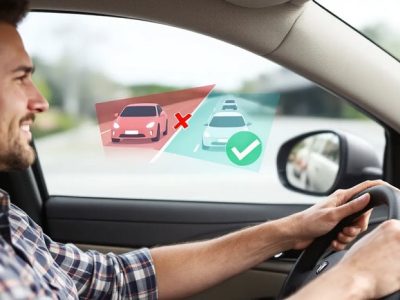
The standard recommendation of a three-second following distance is designed for dry pavement and attentive driving under normal conditions. In aggressive, high-density traffic, expand that gap to four or five seconds.
Many drivers resist leaving space ahead, fearing that other cars will repeatedly cut in front of them. While a few motorists will inevitably slide into the gap, the practical loss of travel time is negligible—typically amounting to mere seconds over a thirty-minute trip. In exchange for that minor concession, an expanded buffer delivers immense psychological and operational relief. You no longer need to react instantly to sudden brake lights, which eliminates jarring stops, reduces brake wear, and gives you time to assess changing traffic flow smoothly.
Neutralizing Tailgaters Without Escalation
Few traffic scenarios spike adrenaline faster than an aggressive driver riding inches from your rear bumper. The natural human reaction is often defensive indignation: tapping the brakes, slowing down abruptly out of spite, or glaring into the rearview mirror.
Every one of these reactions dangerously escalates the situation. A tailgater is already displaying poor impulse control; challenging them only invites a confrontation.
When confronted with a persistent tailgater, adopt a posture of total tactical detachment:
-
Yield the Lane Smoothly: If you are in the passing or left-hand lane, signal early, check your mirrors, and merge to the right as soon as an opening safely presents itself. Never police the road by attempting to enforce the speed limit from the left lane.
-
Maintain Steady Throttle: If you are on a single-lane road or unable to change lanes immediately, resist the urge to alternate between throttle and brakes. Maintain a predictable, consistent speed. Predictability removes the emotional friction that often triggers impulsive passing maneuvers.
-
Double Your Forward Distance: If a tailgater refuses to back off, increase the distance between your vehicle and the car in front of you. This ensures that if the vehicle ahead stops suddenly, you can brake gently and gradually, protecting the erratic driver behind you from rear-ending your vehicle.
Cognitive Detachment and Depersonalizing the Road
The primary psychological driver of road rage is the fundamental attribution error: the tendency to believe that other people’s mistakes are deliberate personal insults driven by malice or incompetence, while viewing our own driving errors as harmless oversights caused by circumstance.
When a driver abruptly cuts you off to make an exit ramp, your brain instinctively registers the move as an intentional act of disrespect. In reality, the other motorist has no awareness of who you are. They may be hopelessly lost, dealing with a frantic personal emergency, or simply suffering a lapse in judgment.
Depersonalizing the behavior of surrounding motorists dissolves the urge to retaliate. View aggressive drivers not as adversaries in a competition, but as unpredictable road hazards—no different than a patch of black ice, a fallen tree limb, or an unexpected pothole. You would never feel insulted by a sudden rainstorm or attempt to retaliate against a deer crossing the road; you simply adjust your line, maintain control of your machine, and proceed on your route. Treating erratic drivers with that same clinical detachment instantly strips away the emotional charge of a chaotic commute.
Eliminating Time Poverty Before Leaving the Driveway
A significant portion of on-road stress is self-inflicted long before the key turns in the ignition. When you leave home with only the bare minimum number of minutes required to reach your destination under ideal conditions, every red light, slow-moving semi-truck, and highway bottleneck feels like an existential crisis.
Operating under time poverty puts your nervous system on a hair trigger. Because you have zero margin for error, any minor external delay is perceived as an active threat to your schedule, making aggressive responses almost inevitable.
Building a mandatory fifteen-minute buffer into your departure schedule completely rewrites your psychological framework. When you know you will arrive comfortably on time even if traffic slows to a crawl, the pressure evaporates. A temporary gridlock stops being a personal disaster and becomes a minor inconvenience.
Aggressive traffic is an unavoidable reality of modern infrastructure, but chronic stress behind the wheel is entirely optional. By taking command of your physical posture, engineering generous spatial cushions around your vehicle, and maintaining an attitude of emotional detachment, you insulate yourself from the hostility of the road. Driving ceases to be an exhausting daily battle and returns to what it should be: a controlled, predictable, and safe transition from one destination to the next.


Comments