
 By
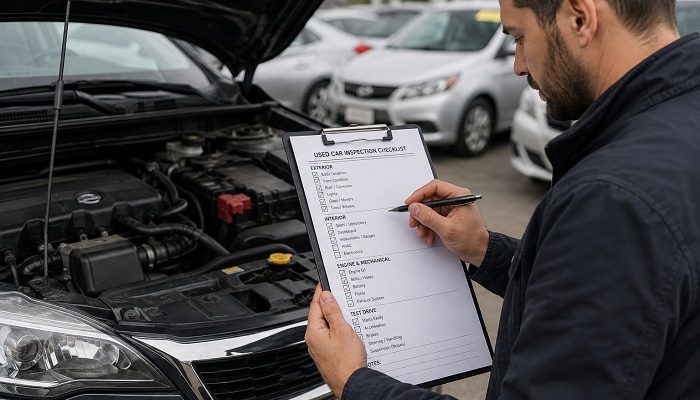
Stepping onto a dealership lot offers a distinct psychological cushion compared to meeting a stranger in a grocery store parking lot. The polished showroom floors, professional sales agreements, detailing bays, and clean vehicle history reports all project an aura of legitimacy. Buyers naturally assume that because a vehicle is parked on an established dealer’s front line, it has already passed an exhaustive vetting process.
That assumption is often an expensive mistake. Dealership inventory is predominantly sourced through regional wholesale auctions, trade-ins with deferred maintenance, and lease returns. While dealers certainly recondition cars to make them presentable, their primary objective is moving inventory profitably, not identifying every brewing mechanical headache. An independent vehicle inspection is the single most effective tool a buyer has to strip away cosmetic sales prep and verify what lies beneath the sheet metal before signing a binding contract.
The Reality of the Dealer Multi-Point Inspection
Almost every used car lot promotes some variation of a comprehensive multi-point inspection. Brochures frequently boast of rigorous seventy-point, one-hundred-point, or one-hundred-and-fifty-point reviews conducted by on-site technicians. While these checklists look reassuring on paper, their practical scope is surprisingly narrow.
In most cases, an internal dealership inspection focuses strictly on statutory safety minimums and immediate cosmetic appeal. Technicians verify that the tires meet state-mandated tread depths, the headlights turn on, the brake pads have a few millimeters of friction material left, and the engine starts without an illuminated warning light.
Crucially, dealership technicians work directly for the seller. Their goal during reconditioning is to address the bare minimum required to pass state inspection and make the vehicle legally roadworthy while protecting dealer profit margins. They are not incentivized to catalog slow fluid seeps, tired suspension bushings, or transient transmission slips that may not trigger a dashboard warning for another thousand miles. Unless an issue presents an immediate liability or outright prevents a test drive, it is frequently noted internally and left untouched.
Why an Independent Pre-Purchase Inspection Is Non-Negotiable
A pre-purchase inspection (PPI) conducted by an independent, third-party automotive technician flips the dynamic entirely. When you pay a licensed mechanic out of your own pocket to inspect a prospective purchase, that mechanic’s sole legal and professional loyalty is to you.
An independent shop has no stake in whether you buy the vehicle. Their evaluation is inherently skeptical, designed to uncover neglected maintenance, prior collision work, and upcoming mechanical expenses.
Depending on the dealership’s policies and your local geography, a third-party inspection generally follows one of two routes:
-
In-Shop Lift Inspection: The preferred approach involves taking the vehicle to an established independent repair facility specializing in that vehicle make. Putting the car on a hydraulic lift allows the technician to inspect structural components, steering linkages, and drivetrain seals that are completely invisible from ground level.
-
Mobile Field Inspection: If a dealer refuses to let the car leave the lot or if the logistics are difficult, mobile inspection services dispatch certified mechanics equipped with diagnostic scanners, paint depth gauges, and lifting jacks directly to the dealership.
What Advanced Diagnostic Scanners and Lifts Uncover
Surface-level assessments rely on what can be seen during a ten-minute test drive on smooth suburban pavement. A skilled independent technician digs much deeper into the vehicle’s digital and physical history.
One of the most critical steps in a modern inspection is reading the vehicle’s onboard diagnostic computer for OBD-II monitor readiness. A unscrupulous seller can easily mask an active check engine light by clearing the codes with a handheld scanner ten minutes before a customer arrives. A qualified mechanic will check whether the vehicle’s emissions monitors have completed their drive cycles. If the system monitors read “not ready,” it indicates the computer was recently reset, signaling a potential hidden engine or catalytic converter fault that will reappear after thirty miles of driving.
Physical inspections also reveal underlying structural anomalies that vehicle history reports frequently miss:
-
Hidden Accident Damage and Paintwork: History reports only capture collisions that were formally submitted through insurance claims or police reports. A technician using an electronic paint depth gauge can instantly detect uneven clear coat thicknesses, panel bond lines, and frame clip welds that indicate substantial, unreported body repairs.
-
Drivetrain Fluid Leaks: Dealerships frequently steam-clean engine bays to present a pristine appearance. An experienced mechanic knows where oil collects, inspecting rear main seals, steering racks, valve cover corners, and differential housings for telltale residue that survives a cosmetic wash.
-
Underbody Corrosion and Flood History: Surface rust on exhaust brackets is normal, but structural rot across subframes and suspension control arms is dangerous. Technicians can also spot silt deposits inside chassis rails, corroded wiring harness connectors under the seats, and oxidized fuse boxes that betray undisclosed flood damage.
Overcoming Dealership Resistance to Outside Inspections
It is common for sales representatives to push back when a buyer requests an independent inspection. You might hear that the car is already certified, that company insurance prohibits customer vehicles from visiting third-party shops, or that another buyer is on their way to look at the car.
Navigating this resistance requires firm, polite boundaries. A legitimate dealership that stands behind the quality of its inventory will routinely accommodate outside inspections. Make it clear that you are a serious, qualified buyer ready to close the deal pending the results of a clean mechanical review. Offer practical solutions: agree to a specific two-hour window for the evaluation, provide a copy of your driver’s license and proof of insurance, or arrange for a mobile inspector to conduct the review directly on their property.
If a dealership flatly refuses to allow any independent mechanic to inspect the vehicle under any circumstances, treat that refusal as an immediate disqualification. Transparency is the baseline of good business; a dealer unwilling to allow an outside set of eyes on a multi-thousand-dollar asset almost certainly knows what those eyes would find.
Turning the Inspection Report Into Commercial Leverage
Receiving an inspection report that lists several mechanical flaws does not automatically mean you should walk away. In fact, an objective list of necessary repairs is the most powerful negotiating asset you can bring to the sales desk.
When a buyer simply asks for a lower price because they feel the car is expensive, sales managers easily deflect the request. When that same buyer presents a written diagnostic report from an ASE-certified technician outlining five hundred dollars in worn brake components, six hundred dollars in weeping valve cover gaskets, and an aging battery, the conversation shifts from subjective posturing to concrete math.
You can leverage this documentation in three distinct ways:
-
Direct Price Reductions: Request an immediate deduction from the purchase price that matches or closely offsets the estimated repair costs.
-
Mandated Pre-Sale Repairs: Require the dealership to complete the necessary repairs using verifiable Original Equipment Manufacturer parts as a contractual condition of the purchase agreement, backed by formal repair order documentation.
-
Walking Away Cleanly: If the inspection uncovers major powertrain sludge, severe structural rust, transmission slippage, or frame damage, the decision is simple. Walking away saves you from inheriting an unreliable asset that could cost thousands of dollars in emergency repairs within weeks of ownership.
Protecting Capital in an As-Is Marketplace
The vast majority of used vehicles are sold under an as-is, where is clause, clearly displayed on the required Federal Trade Commission Buyers Guide taped to the window. The moment your signature touches that paperwork and the tires roll across the dealership curb, the merchant’s financial obligation ends entirely. Any catastrophic mechanical failure that occurs two miles down the road becomes exclusively your financial responsibility.
Spending a couple of hundred dollars on a detailed third-party pre-purchase inspection is not an added friction point in the car-buying process; it is fundamental insurance on a major financial commitment. By verifying mechanical integrity, exposing masked defects, and grounding negotiations in factual repair data, you ensure that the car you drive home delivers reliable transportation rather than an endless drain on your bank account.



Comments